Roop Reddy

Roop Reddy

Co-Founder, Documentation.AI

Roop Reddy is the co-founder of Documentation.AI, an AI-native documentation platform. He has held leadership roles across product and engineering, and writes about documentation architecture, docs-as-code, and writing for AI agents.

36 articles by Roop Reddy

Mintlify vs ReadMe: Docs Site vs API Portal (2026)

Mintlify sells a documentation site. ReadMe sells a developer portal that knows which reader called which endpoint. Neither one includes the assistant your readers talk to in the price it advertises. We built the same documentation on each and priced what a working team actually pays.

5 Best Fern Alternatives in 2026

Fern gives its documentation platform away and prices the next step by sales call. This guide compares the alternatives on the questions that end most Fern evaluations: what happens at the eleventh editor and the second site, how much reader AI you actually get, and who replaces the SDK generation that made Fern worth buying in the first place.

Fern vs Documentation.AI: Features, Pricing, and AI Compared (2026)

Fern generates SDKs in nine languages, and nothing here replaces that. It also needs a Git repository before anyone can edit a page, includes one site on both its plans, and publishes no price between free and Enterprise. We built the same docs on both and priced what each really costs.

Fern Review 2026

Fern generates documentation and SDKs from a single API specification, and it now gives the documentation half away. This review assesses the editor, API explorer, Fern Agent, analytics, and preview through hands-on use, and explains what the free plan does not cover.

5 Best Redocly Alternatives in 2026

Redocly multiplies a per-seat rate by the number of product modules you switch on, holds the reader assistant and analytics for Enterprise, and asks every contributor to open a pull request. This guide compares the five alternatives teams actually shortlist, with published prices, real plan boundaries, and what each one costs a growing team.

Redocly vs Documentation.AI (2026)

Redocly is an API tooling company with a documentation platform inside it, and it gives a spec-first team what it wants: linting, mock servers, five Git providers, and a reviewer that reads OpenAPI and Markdown together. It also has no free plan, no block editor, a 100-page ceiling on Pro, and an Ask AI that only turns on at Enterprise. We built the same docs on both and priced them.

GitBook Pricing 2026: Plans, Add-ons & Real Cost

GitBook charges for sites and for people separately, and meters its reader assistant on top of both. This guide explains how those charges combine, where each AI feature begins, and how to estimate the cost of a single documentation site or several before you commit.

GitBook Review 2026

GitBook pairs an editor that leads its category with a pricing model built around individual sites. This review assesses the editor, Git Sync, API reference, agent, and reader AI through hands-on use, and explains how costs change as a team adds sites and people.

Mintlify Pricing 2026: Plans, Credits & Real Cost

Mintlify's plan price is only part of what you pay. This guide explains what each plan includes, how the shared AI credit balance is spent, what happens when it runs out, and how to estimate a monthly bill that reflects how your documentation is actually read.

Mintlify Review 2026

Mintlify has become a leading platform for polished developer documentation, and its pricing has changed considerably this year. This review assesses the editor, API playground, assistant, and agent through hands-on use, and explains what the free plan withholds and how costs behave as usage grows.

ReadMe Pricing 2026: Plans, Add-Ons & Real Cost

ReadMe's plans each cover a single project, and several of its most useful capabilities are billed beside them. This guide sets out what each plan includes, how the add-ons and additional admins change the total, and when an Enterprise contract becomes unavoidable.

ReadMe vs Documentation.AI: Is an API-Only Docs Platform Enough in 2026?

ReadMe sells one project per plan and charges separately for reader-facing AI and API metrics. Documentation.AI sells one project that holds several products. We built the same API documentation on both, and the difference turned out to be almost entirely in the pricing model rather than the product.

ReadMe Review 2026

ReadMe offers an exceptionally strong interactive API reference, surrounded by capabilities reserved for higher tiers. This review assesses the editor, AI tools, seat and role model, and the upgrade to ReadMe Refactored through hands-on use, and explains what teams should expect to pay.

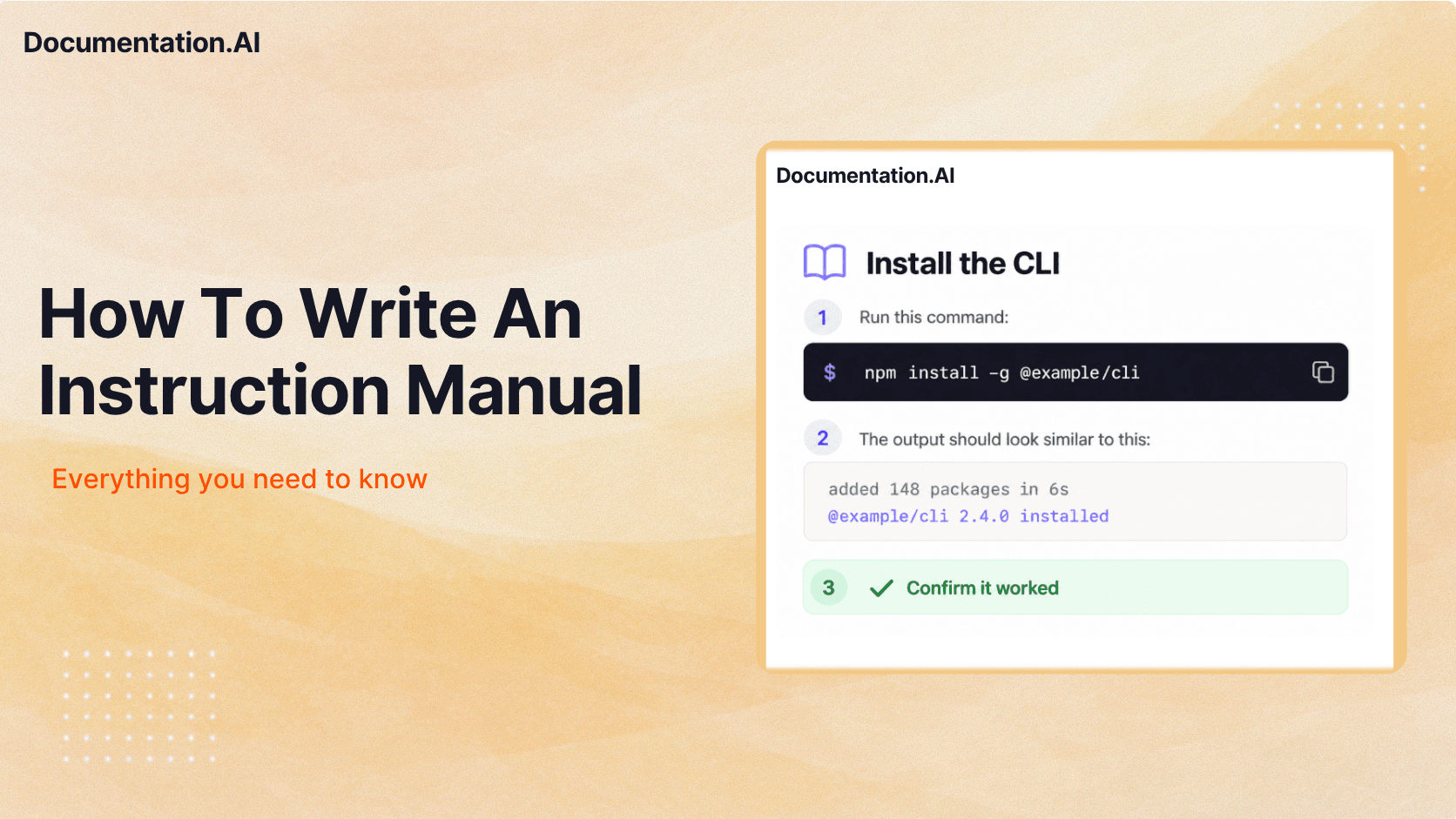
How to Write an Instruction Manual Someone Can Actually Follow

An instruction manual is judged on one thing: whether the reader reaches the working end state. Here is how to write one for software, from prerequisites that carry their weight through expected output, inline failure handling, and the clean-room test that proves it works.

Best AI Tools for Documentation in 2026

Documentation in 2026 includes API docs, public product guides, internal knowledge bases, developer documentation, and SOPs. Each serves a different audience, which is why no single tool fits all. This guide compares the best AI documentation tools by use case.

Best Developer Documentation Tools in 2026 for API, Code and Internal Docs

Discover the best developer documentation tools in 2026 with this complete comparison of platforms for API docs internal knowledge bases and unified systems. Includes top choices like DocumentationAI, Mintlify, GitBook, and more with pricing features AI support and onboarding performance insights.

7 Best API Documentation Tools in 2026

API documentation in 2026 is evaluated by onboarding speed, interactive testing, and real-world adoption. This guide compares the best API documentation tools based on API playgrounds, default examples, pricing, and how well they support customer-facing APIs.

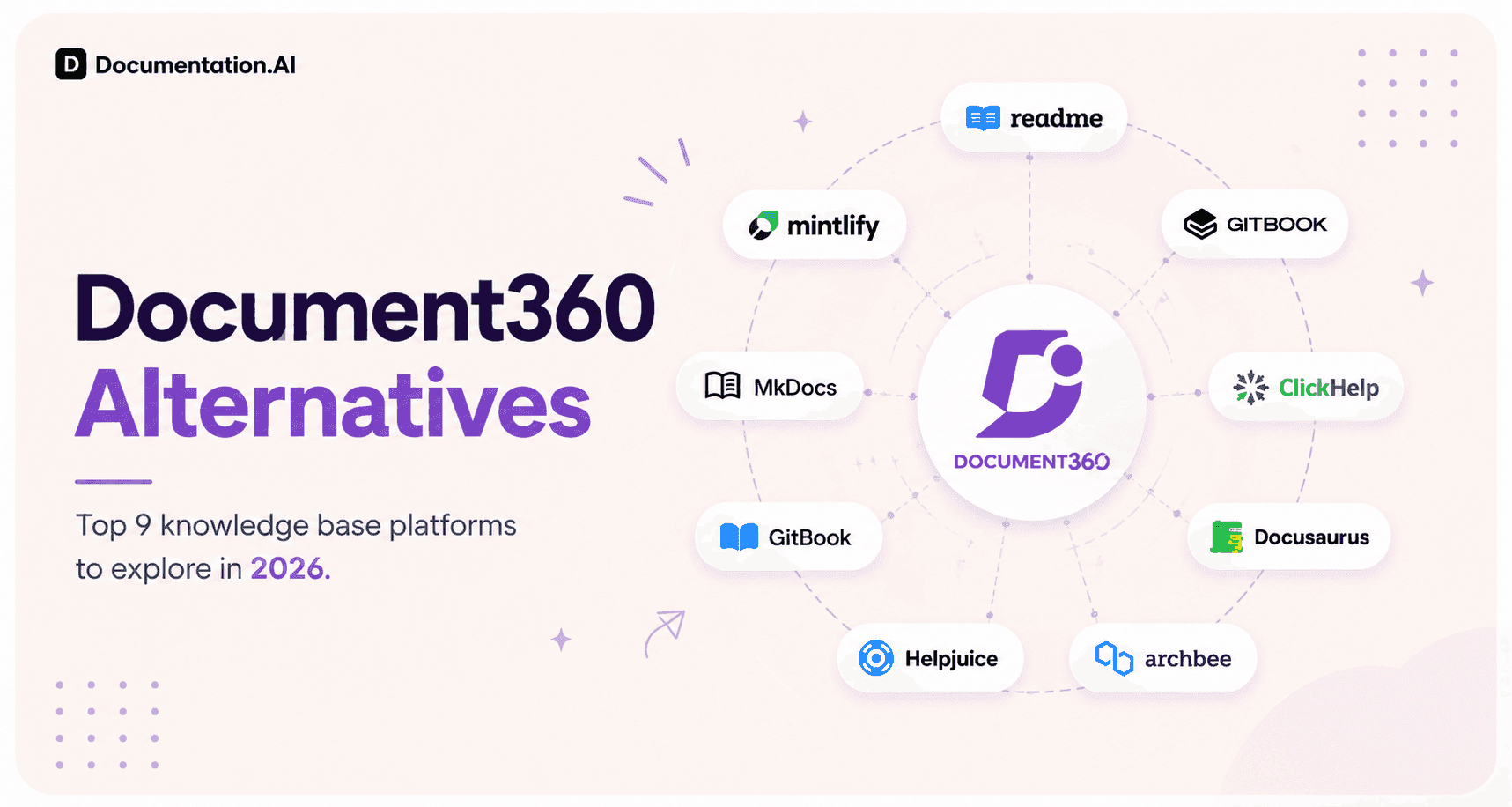
9 Best Document360 Alternatives for Documentation in 2026

Compare the best Document360 alternatives in 2026. See how modern documentation tools differ in workflows, automation, pricing, team fit, and long-term maintenance. This guide helps you choose the right platform for evolving documentation needs across product, support, and engineering teams.

5 Best ReadMe Alternatives in 2026

ReadMe builds an exceptional interactive API reference, then places roles, additional projects, and full reader AI on higher tiers or separate add-ons. This guide compares the platforms ReadMe teams most often shortlist on the points that decide a switch, and is plain about where ReadMe still leads.

5 Best GitBook Alternatives in 2026

GitBook still sets the standard for block editing, and its pricing is still built around one site at a time. This guide compares the strongest alternatives on the questions that usually end a GitBook contract: the cost of adding docs sites, reader-facing AI, control over the published design, and how your content gets out.

Document360 vs Documentation.AI: Best Document360 Alternative in 2026

Compare Document360 and Documentation.AI to understand how each platform supports modern documentation teams. This hands-on comparison covers collaboration, publishing, and long-term maintenance, and explains why many teams evaluating a Document360 alternative are choosing Documentation.AI in 2026.

Mintlify vs Documentation.AI: Full Feature and Pricing Comparison (2026)

Mintlify and Documentation.AI both offer docs-as-code workflows, but they differ in editor scope, what the AI agent maintains, and how credits are priced. Documentation.AI suits mixed teams that need structural changes without config edits, a far larger credit allowance, and an assistant that reports back the questions your documentation failed to answer.

What Is AI Documentation and Why It Matters Today

Product documentation is no longer something teams update occasionally; it’s now a living part of the product. AI documentation keeps content accurate, aligned with fast releases, and helps tools like ChatGPT and Claude give reliable answers while making updates easier to maintain.

Diátaxis Framework: Organize Documentation for Users, Not Authors

Good documentation isn’t about writing more; it’s about giving users exactly what they need. The Diátaxis Framework helps teams organize content by user intent, making docs clearer, easier to navigate, and far more effective. Here’s how Diátaxis brings order to documentation.

5 Best Mintlify Alternatives in 2026

Mintlify publishes some of the most polished documentation available, and it keeps its AI, its governance controls, and additional sites on paid tiers. This guide compares the leading alternatives, free and open-source options included.

Importance of Documentation in the AI Era

In the AI era, the importance of documentation is huge. Treat docs as part of your product. Structure them, keep them current, add MCP access and a helpful AI assistant. You’ll boost discovery, speed onboarding, cut errors, and keep users around.