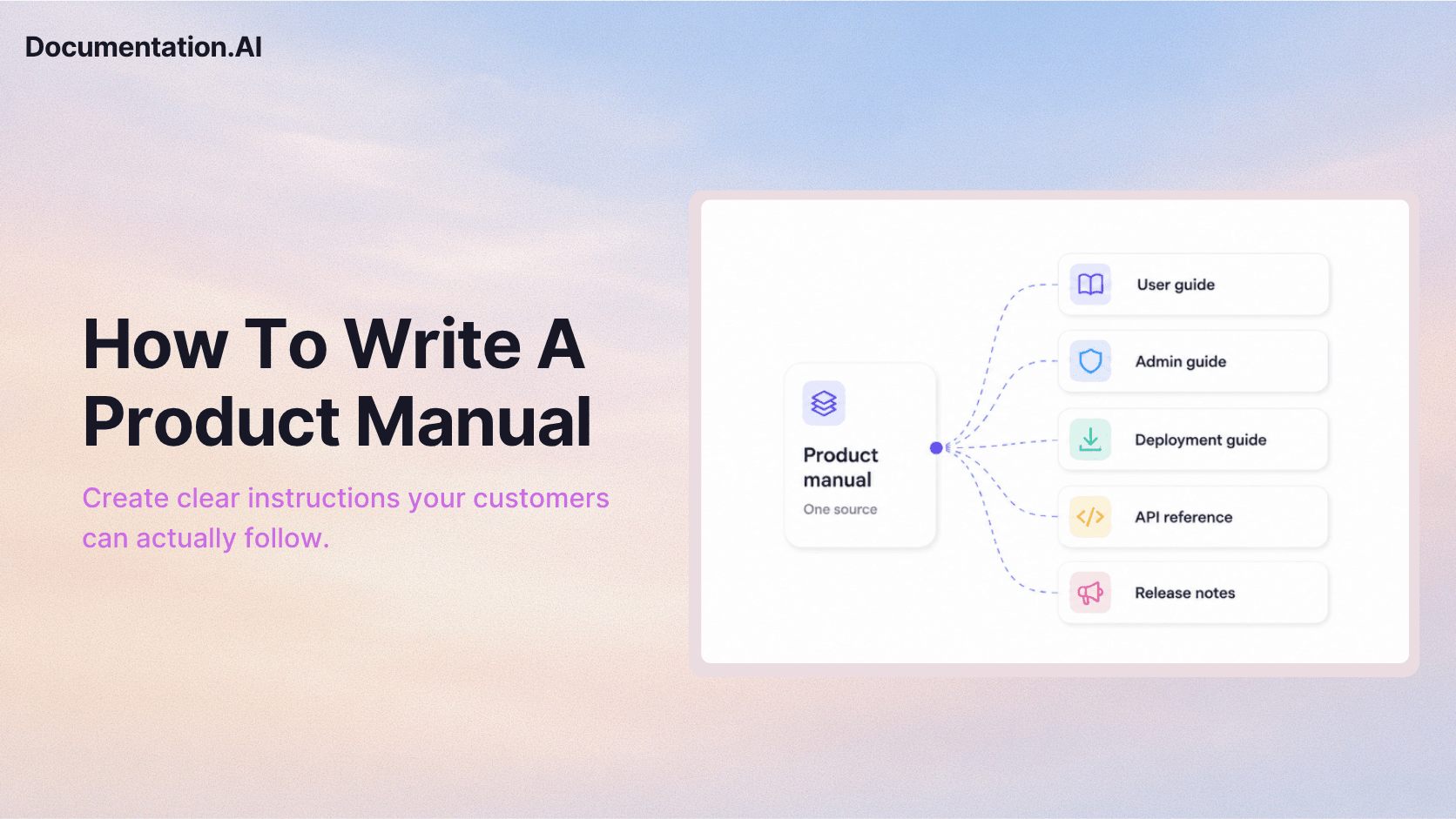
How to Write a Product Manual: The Complete Guide
Learn how to write a product manual. Get a practical guide to product manual structure, content, best practices, examples, and maintenance.

Learn how to write a product manual. Get a practical guide to product manual structure, content, best practices, examples, and maintenance.

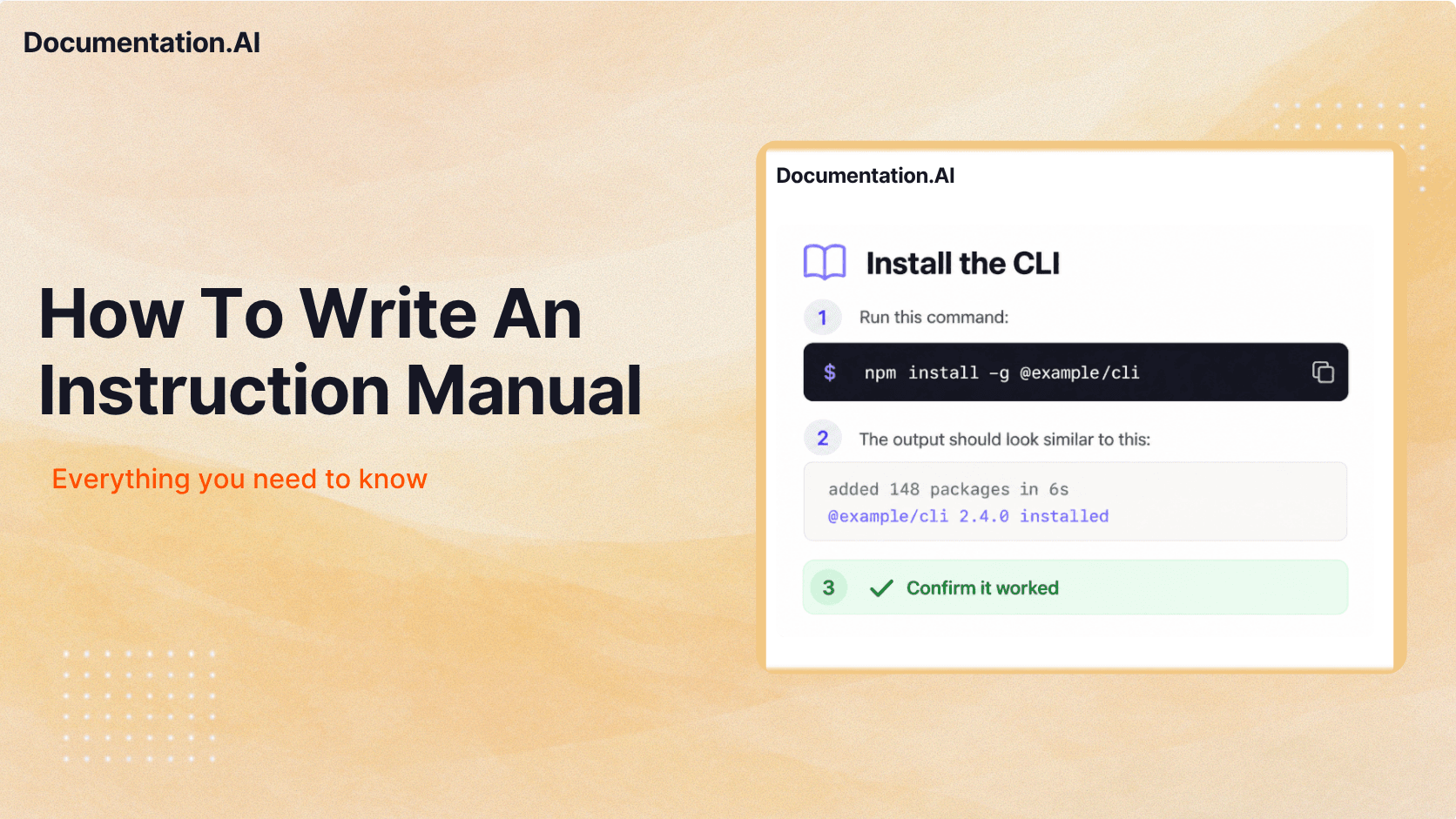
An instruction manual is judged on one thing: whether the reader reaches the working end state. Here is how to write one for software, from prerequisites that carry their weight through expected output, inline failure handling, and the clean-room test that proves it works.

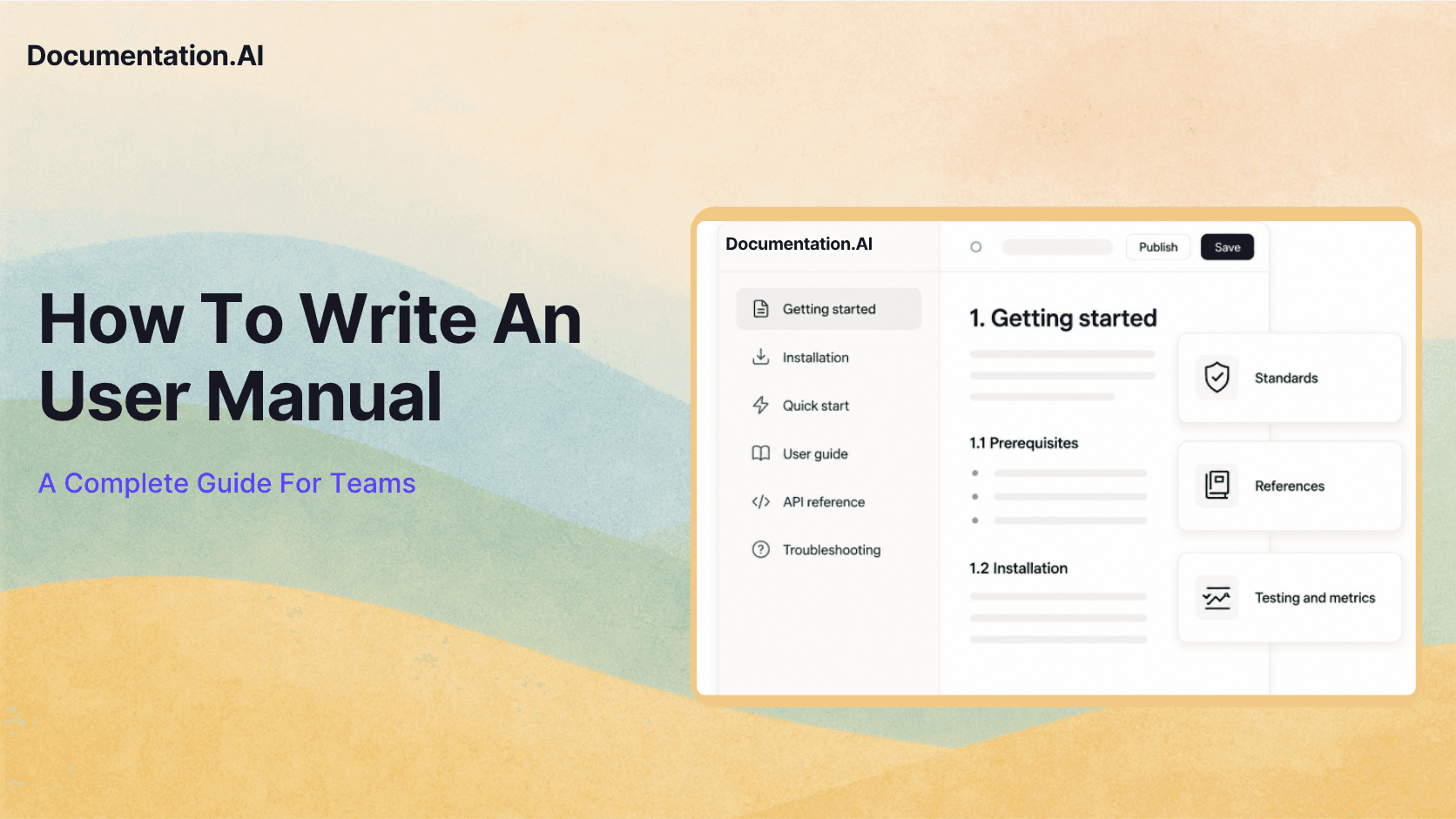
A practical user manual guide: how to create a user manual from scratch, a template you can copy, and what changes when you write a user manual for a software application.

Protect documentation beyond passwords. Learn how access control, authentication, and delivery-first systems keep content secure, scoped, and trackable. A practical guide to managing sensitive docs without losing control as your team scales.

Reduce support tickets with better documentation and AI. Learn how structured docs power AI deflection, agent copilots, and self service support while keeping product knowledge current and measurable through the right metrics. A practical playbook for scaling support without hiring more agents.

Product documentation is no longer something teams update occasionally; it’s now a living part of the product. AI documentation keeps content accurate, aligned with fast releases, and helps tools like ChatGPT and Claude give reliable answers while making updates easier to maintain.

Good documentation isn’t about writing more; it’s about giving users exactly what they need. The Diátaxis Framework helps teams organize content by user intent, making docs clearer, easier to navigate, and far more effective. Here’s how Diátaxis brings order to documentation.

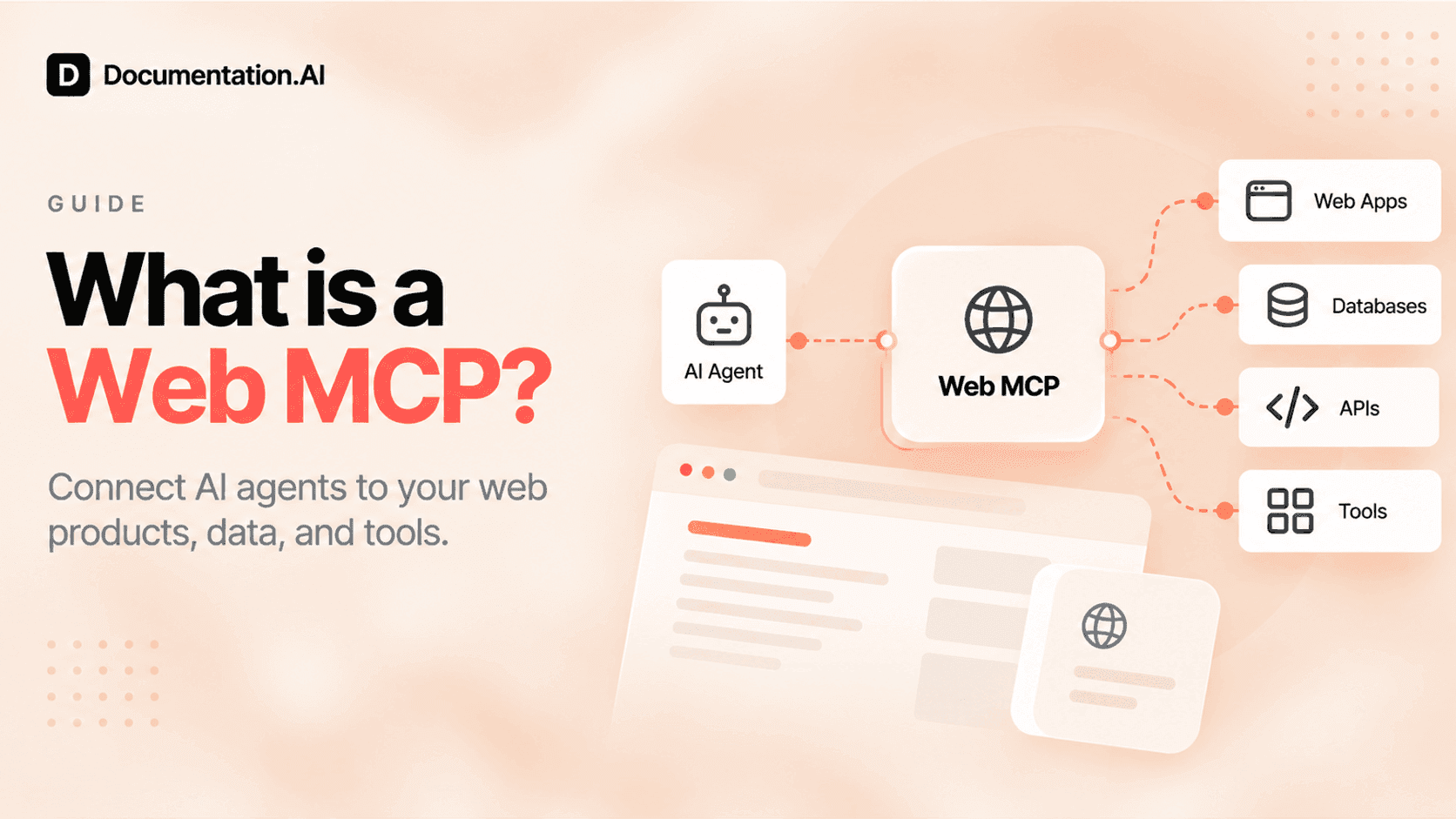
In the AI era, the importance of documentation is huge. Treat docs as part of your product. Structure them, keep them current, add MCP access and a helpful AI assistant. You’ll boost discovery, speed onboarding, cut errors, and keep users around.